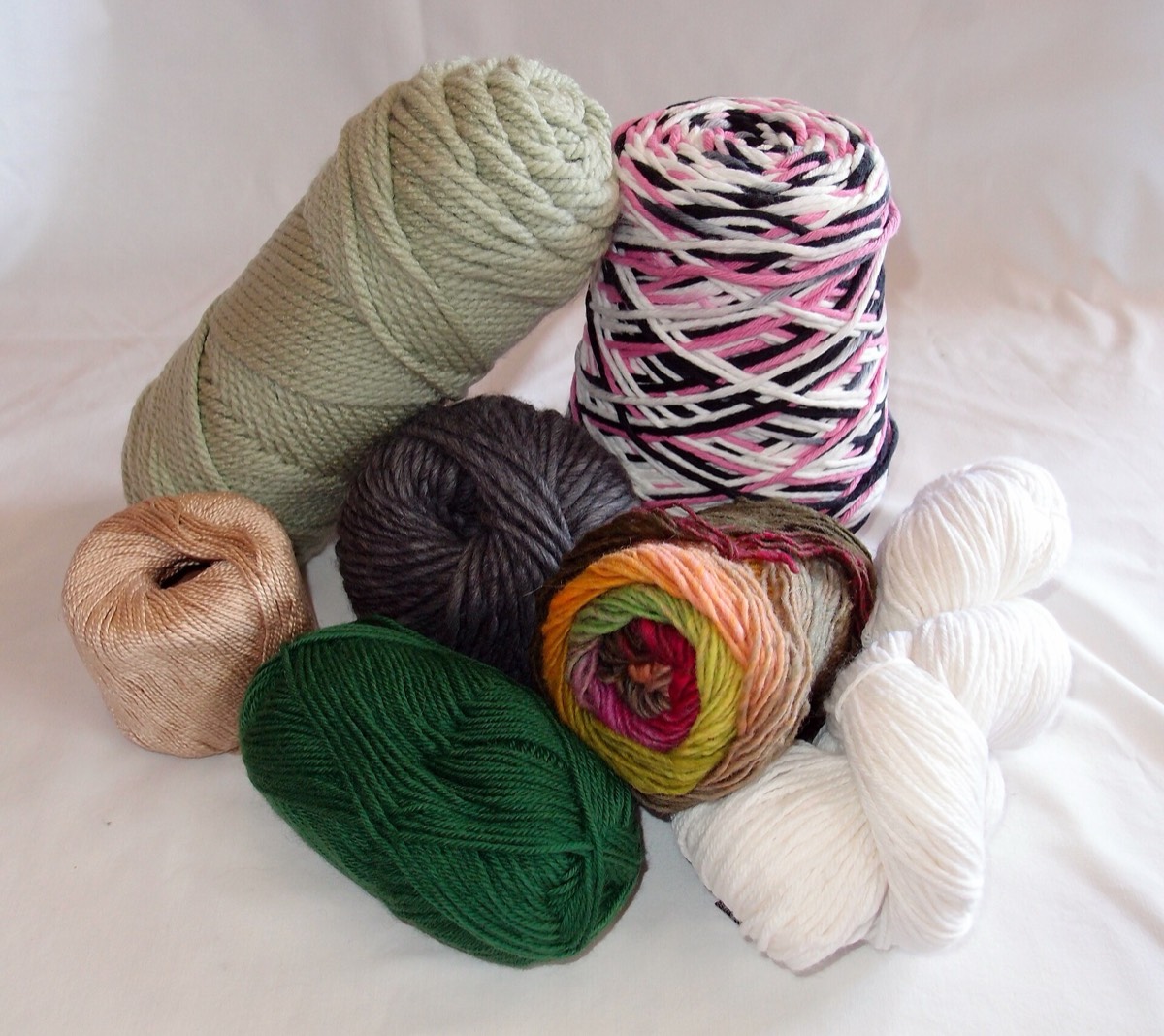

Choosing a pattern from the yarn you already have is the reverse of the usual process. Instead of buying yarn for a pattern, you find a pattern that expects the gauge your yarn can produce. It is possible, but it requires reading the pattern's gauge line, not just its weight label.
The weight category is the first filter. The gauge is the second. The fabric is the third.
1. Identify the yarn
Use the label: fibre, put-up, length per 100 g, and the suggested gauge. If the label is gone, swatch the yarn in stockinette or single crochet and measure. The CYC weight category is a range, so two yarns in the same category can still knit at different gauges.
2. Compare with the pattern's gauge
The pattern's gauge line gives the target: stitches and rows over 10 cm in a specified stitch. If your yarn can reach that gauge with a needle size you are happy with, the pattern is a candidate.
If the pattern is in a different weight category, it is usually not a candidate without re-drafting. A DK yarn in a worsted pattern will produce a denser, narrower fabric; a bulky yarn in a DK pattern will be loose and heavy.
A worked example
You have a DK yarn that gives 22 stitches per 10 cm on 4 mm needles.
A worsted pattern asks for 18 stitches per 10 cm. If you use the DK, the garment will be about 22% narrower at the same stitch count. The pattern is not a match.
A DK pattern asks for 22 stitches per 10 cm. The same yarn is a match. Swatch the pattern's stitch, wash it, and check the row gauge before committing.
3. Match the fabric, not only the number
Two yarns can reach the same gauge with different fabrics. A soft, loose-spun yarn at 22 stitches may feel drapey; a tight, plied yarn at 22 may feel dense. The pattern's sample has a fabric in mind; your swatch tells you whether you can get close.
When to cross a weight boundary
- Loose, simple shapes. A blanket or a scarf can often be worked at a different gauge; recalculate the dimensions.
- Deliberate fabric changes. Holding a lace yarn double, or using a bulky yarn at a loose gauge, can be a design choice.
- Fitted garments. Crossing a weight boundary changes the stitch counts, armhole and sleeve; treat it as a re-draft.
- Structure-sensitive patterns. Cables, lace and colourwork are less forgiving of a gauge change.
4. Check the quantity
A pattern written for a different weight will have a different yardage. Even if the gauge matches, compare the total metres, not the skein count. Use the pattern's yardage as a cross-check and add a buffer.
Check row gauge as well
A pattern can match your stitch gauge and still fail on rows. Armhole depth, sleeve caps and vertical repeats depend on row gauge. If your rows are far from the pattern's, the garment may be the right width and the wrong length.
If the yarn is already wound into a cake, you can still swatch from the outside end. Do not assume the label's gauge; the swatch is the measurement that matters. Record the gauge and needle in your project notes.
Limits
Weight categories are broad, and gauge is the real measurement. A pattern's gauge line is the best filter for matching a yarn you already own. If the gauge is far from what your yarn can produce, choose a different pattern rather than forcing the yarn.
Check the weight band with the yarn weight finder, then use the substitution method.